Flow Control &
Experimental Turbulence Laboratory
Research
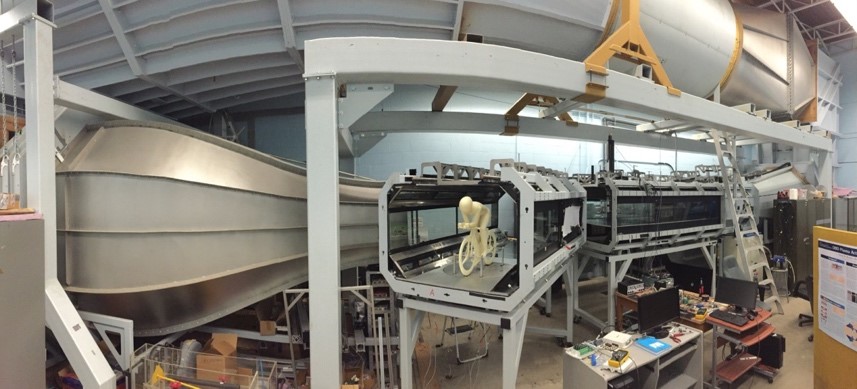
The work in the FCET lab relies heavily on experimental data obtained in our wind tunnel facilities using a number of state of the art flow diagnostic methods, including hot-wire anemometry and laser based measurement tools (e.g. PIV). Computer simulations are also an important part of the work by complementing and enhancing the experimental investigations. An overview of ongoing projects is given below.
Current Projects
Unsteady Aerodynamics of Airfoils in Periodic Streamwise Gusts at Low Reynolds Numbers

Unmanned aerial vehicles (UAVs) are increasingly being used for a wide range of applications. These vehicles often operate at low speed in urban or mountainous terrain, where wind gusts are present and can have a fundamental impact on the aerodynamic performance of the aircraft. Our research is thus concerned with the experimental investigation of the unsteady aerodynamic behavior of airfoils, when they encounter periodic streamwise gusts at low Reynolds numbers.
The project is aimed at both: a) characterizing the unsteady response of an airfoil for a wide range of laminar and turbulent gusts and b) understanding the flow physics behind the observed trends in the airfoil response. A broad range of both laminar and turbulent streamwise gusts can be produced in the wind tunnel using a state-of-the-art active grid device, which modulates the freestream flow in the working section using a series of baffles. A multi-axis load cell is used to measure the unsteady loads on a SD7003 airfoil model, while the flow physics is investigated using smoke-flow visualization and particle image velocimetry (PIV).
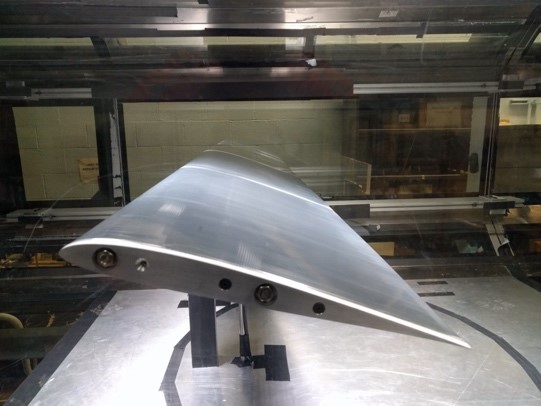
The experiments are conducted at both low angles of attack in the pre-stall regime and high angles of attack in the post-stall regime. In the former, the flow is often nominally attached with the presence of either laminar separation bubbles or mild trailing edge separation, while flow in the latter regime is fully separated.
The presence of boundary layer separation at low Reynolds number is known to affect the unsteady aerodynamic forces and moment, when compared to the fully-attached flow cases. Hence, a deeper understanding of the important flow features that affect the dynamics of the aerodynamic loads is important. Such an understanding of the flow physics will enable development of better physics-based aerodynamic models in the future that can be subsequently used for better aerodynamic, structural, and controller designs.


Past Projects
Nonparallel Cylinders in Tandem Arrangement
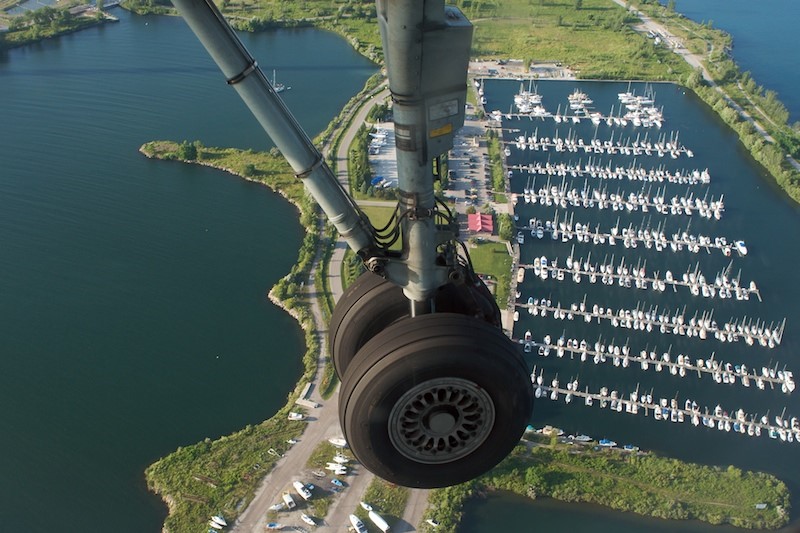
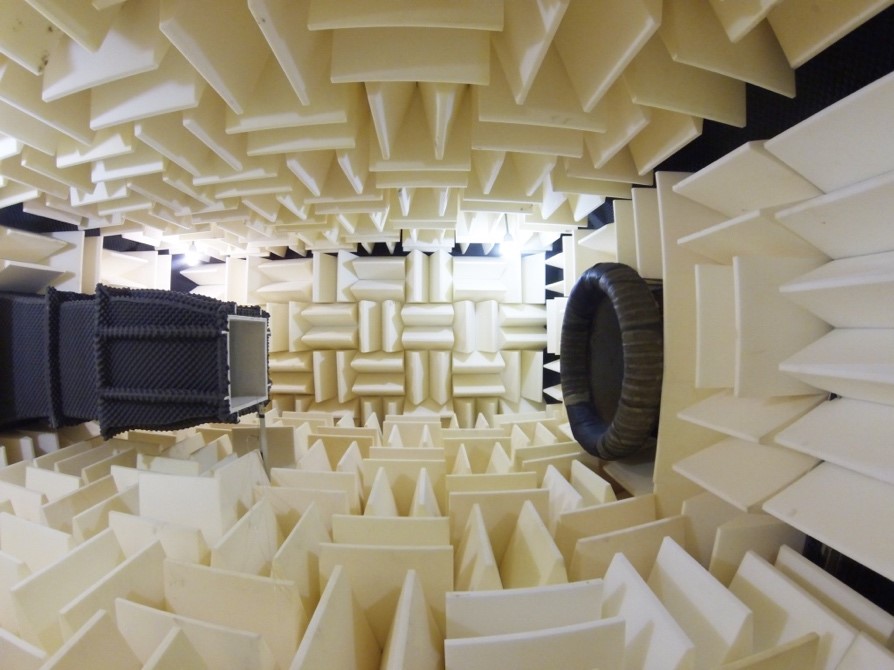
In order to reduce the airframe noise emission from a landing gear, it is important to identify its sources and understand the fluid mechanics phenomena that produce them. We focus on the nonparallel tandem cylinder configuration, which is a good representation of a common geometry of a landing gear but is largely unexplored. Experiments in this project are performed in the anechoic wind tunnel - an open loop, open jet facility and the general arrangement of our model can be seen in the photo below. A wide range of different Re numbers (20,000 – 140,000) and inclination angles (0 – 45 degrees) are being tested.

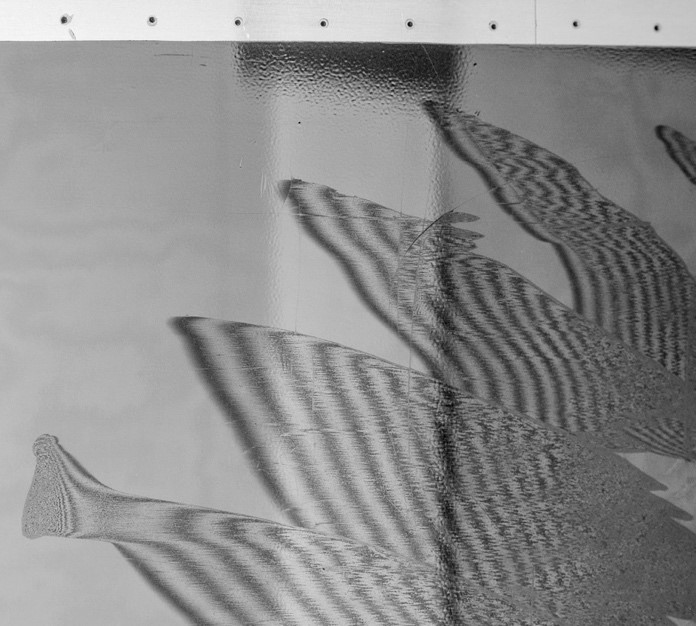
We perform PIV experiments with simultaneous pressure measurements to obtain a clear picture of the flow field and specifically the vortex shedding behavior. In particular, changes in the shedding frequency over the cylinder(s) span allow us to deduce specific patterns of the vortex shedding which can have a significant effect on the aerodynamic loads and noise emissions.
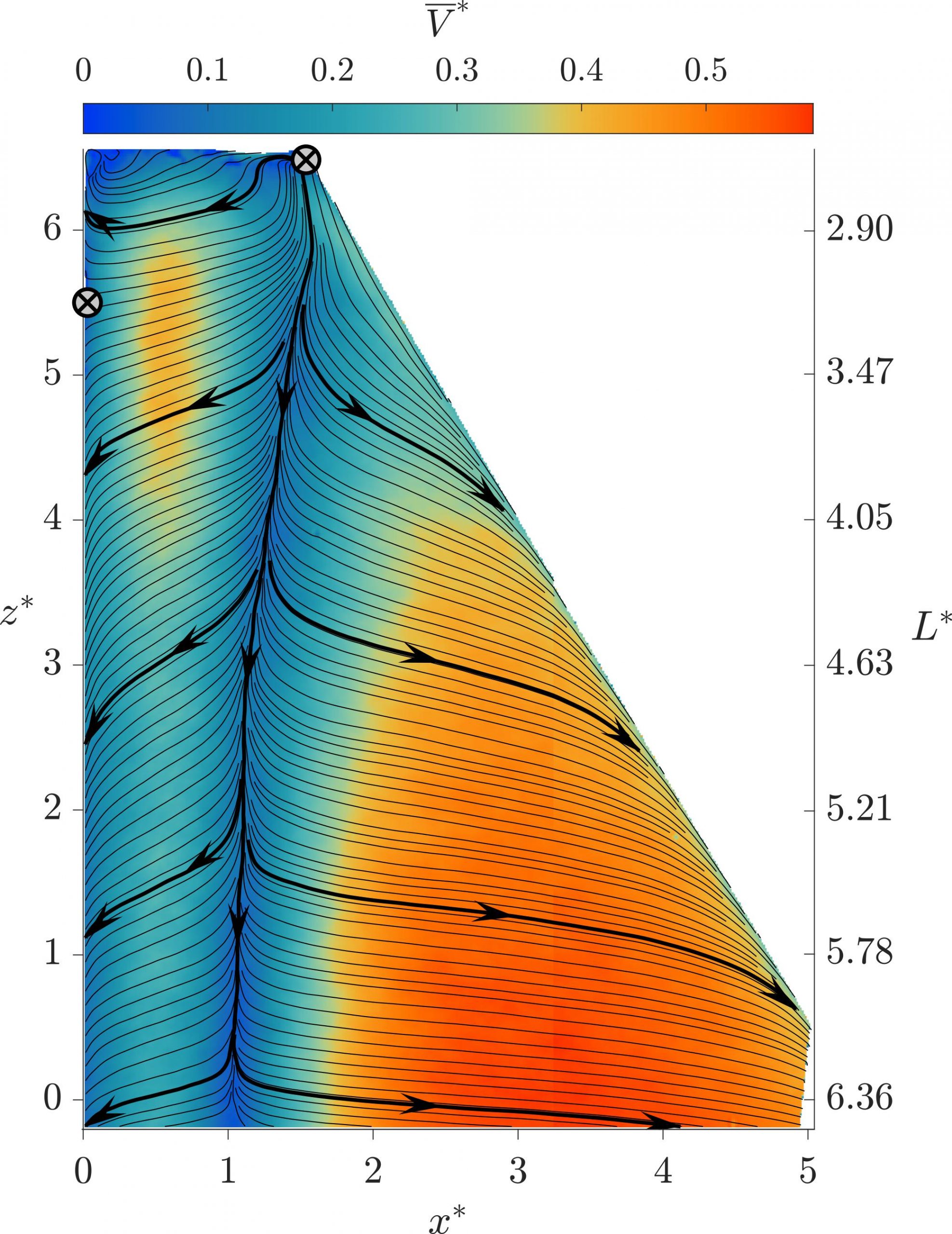
Our results are providing insight into how the different flow regimes such as reattachment of the separated shear layers from the upstream cylinder on the downstream cylinder, as well as independent vortex shedding from each cylinder (co-shedding) behave in this type of configuration.