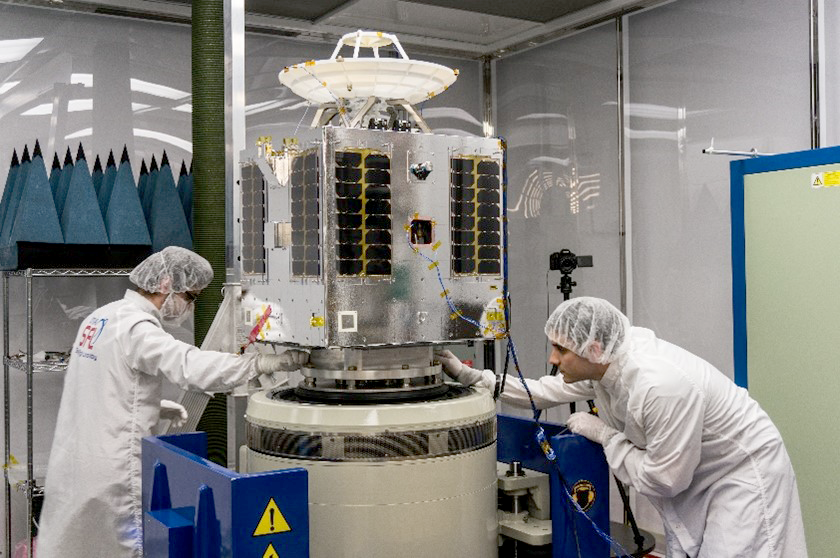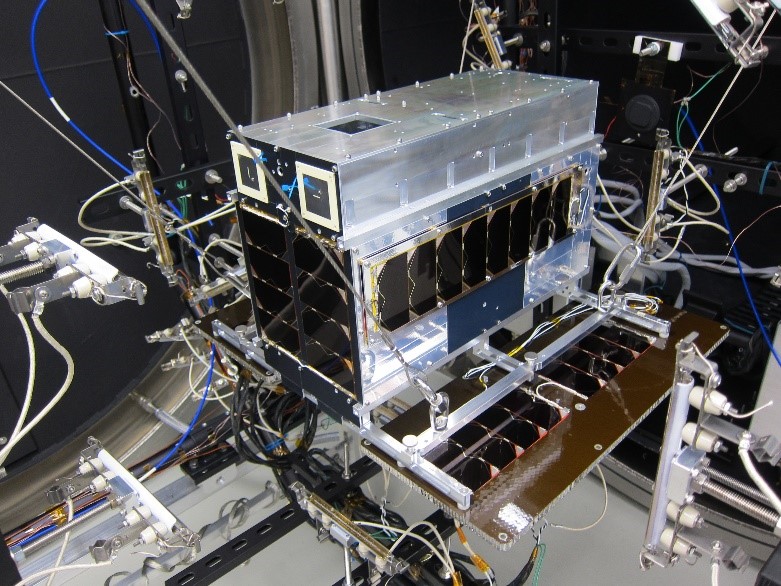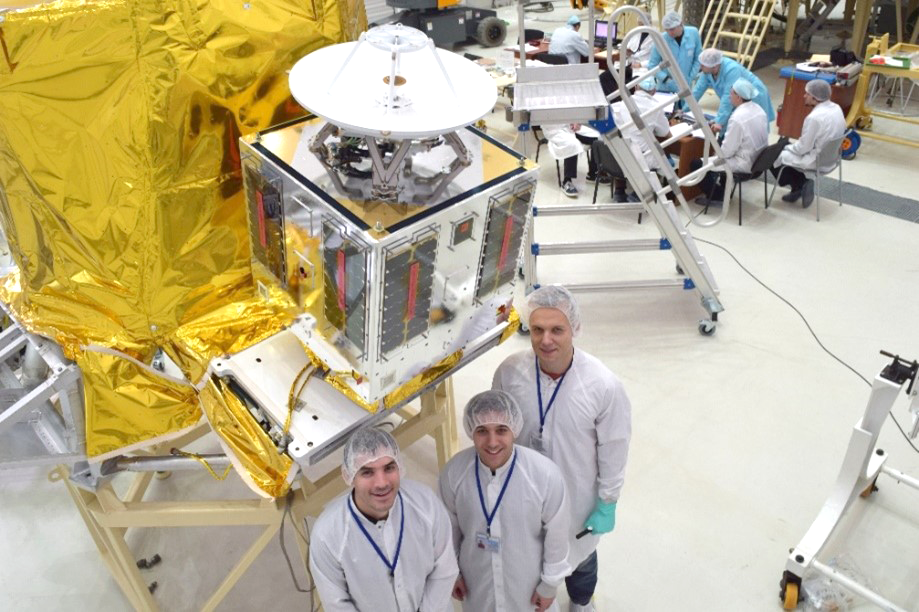
Established at the University of Toronto’s Institute for Aerospace Studies (UTIAS) in 1998, the Space Flight Laboratory (SFL) has researched and developed novel technologies for small spacecraft, successfully pushing the envelope and changing the world’s perception of what small satellites can do. In its nearly 30-year history, the SFL team has developed satellites that achieved more than 376 cumulative years of operation in orbit.
SFL has developed missions for Earth observation, communications, surveillance and monitoring, technology demonstrations, and planetary science for a wide range of sectors, including commercial organizations, government and academic research institutions. SFL also developed its own modular, scalable power systems to meet varying demands and supported launch services for small satellites, microsatellites and nanosatellites worldwide.
As part of a space research facility at U of T, students gained real-world experience through their graduate studies while at UTIAS. Students specialized in one of several areas while actively participating in the design of the complete spacecraft, including:
- On-board computers
- On-board software
- Tracking, telemetry and command (radios, antennas, communications)
- Ground station hardware and software
- Power systems analysis and design
- Thermal analysis and design
- Structural analysis and design
- Attitude control system analysis, simulation and design
- Propulsion
- Payloads (instruments for science and technology demonstration)
- Systems engineering (mission analysis, requirements, design trades, budgeting)
UTIAS and U of T have decided to wind down SFL’s satellite manufacturing operations. While the university hopes a new partner will continue manufacturing operations in the future, at this time, SFL is not accepting any new clients as its primary focus will be on academic delivery.
Past projects
SFL has achieved a remarkable legacy by working closely with partners to develop custom small satellites, microsatellites and nanosatellites built on space-proven platforms from 3 to 500 kilograms. SFL innovations over the years have allowed small satellites to be used for applications previously not considered.
These innovations include advanced attitude control, precise pointing and autonomous formation flying technologies. SFL has achieved more than 80 operational successes that fulfill a wide variety of applications, such as Earth observation, atmospheric monitoring, ship tracking, communication, radio frequency (RF) geolocation, technology demonstration, space astronomy, solar physics, space plasma and other scientific research.
Read about some of SFL’s recent work below:
Contact us:
Vince Arone, P.Eng., MBA
Executive Director Transformation, SFL
Institute for Aerospace Studies
4925 Dufferin St., Ontario, Canada M3H 5T6
v.arone@utoronto.ca